Header: Search bar

I'm almost finished coding for the header section of the new layout! So far I have the logo down, the pages navigation, and the main navigation and the social media buttons. So I'm only missing the search bar and the tagline.

For a long time I knew where I wanted the search bar to be displayed within the header section, but really had no clue as to the esthetics of it.

As I always do when I don't know where to start, I search for what's already been done until I find something I like. I found this tutorial that I really liked so I started implementing it.

After some color changing of the code, I ended up with this:


For some reason, I could not get the actual search function to work with this code, and try as I might I could not understand WHY. Also, I had a really hard time making this responsive since the Go circle was coded with ems. As I learned when doing the social media buttons, responsive circles with text inside are rather tricky, and well kinda impossible to achieve.

I let it be for a while while I worked on the main navigation, and once that was done I came back to it. I then thought it looked too busy and fancy, and I wanted to simplify the design of it. And also find a way to make it more responsive.

So I found this code instead. I forewent the option of having placeholder text because that's done with Javascript and I don't know Javascript. I'm trying to stay within HTML5 and CCS3.

In the end, I could only make the width responsive, and not the height. Which I guess in hindsight is also true for the navigation menu. This is because font cannot be made truly responsive (as in scale to the width of the browser window), and this element is in major part font dependent. Yes you can define it in ems, but that means it will be adaptable and not responsive/scalable. If that makes any sense...

Anyway, once it gets to the point where it no longer looks proportionate in the design, there will be a breakpoint that will completely rearrange the layout, and I will then be able to change the look of it so it's once again proportionate. Which will mostly be adjusting the font size.

Making the width responsive was a bit more complicated than I would've thought, and necessitate a lot of cascading widths to be set.

The cascade for this element is like so:
body--> header --> search bar container 1--> search bar container 2--> search input and search button

The header is 80% of the body, the search bar container 1 is 67% of the header (because it's next to the logo which together make up 100% of the width), the search bar container 2 is 50% of the space beside the logo with a left padding of 50%(to push the search bar to the right), the search input is 70 % of that space while the search button is 30% (which together make up 100%). Did you follow that? Yeah, I know complicated.

I changed the color scheme of the original tutorial, removed shadows to make it simpler, and that was pretty much it for this guy.


Continue Reading...

Header: Social Media Buttons

My quest for the social media buttons as to make them with pure CSS, as I did with my main navigation. That means that the social medianess, as in the font or icon of each button, would have to be rendered by a font. I have yet to find a social media font that has all the ones I want: RSS, email, Facebook, g+ and Bloglovin. But then again if I made small images and put them inside the button, they would be easily scalable... hmm, food for thought.


I'm trying to stay away from images as much as possible because the nature of my blog means the content is already pretty image heavy. So as to not increase load times beyond that, I'm trying to minimize image sizes for the blog layout, because afterall those are the images that are loaded every.single.time a page on my blog is loaded. Make sense?

I wanted simple yet unique social media buttons. Not just a circle, not just a square, definetely not a bunting as that is being done wayyyy too much, but something different. After a lot of searching and pondering, this idea came into my head: a square with 2 facing corners that are rounded. And a border. And a radial gradient to up the fanciness :)

I used this article to help make it responsive. In the end, the tutorial was more complicated than it needed to be, and well, didn't even work. But I couldn't have figured it out without it, so it's worth a mention.

Basically all you need to do is set the width in %, set the height to 0, set the TOTAL padding equal to the width in %. Because there's text that I want centered in the shape, I set the padding-top first, then the padding-bottom for it to look like it's even on all sides. Of course you complicate things if you put a border, but again you can just use the border-box trick I mention here.

Then, round 2 opposing corners (I rounded by 40%, so they remain responsive), add radial gradient, and you're done. Each button is a seperate span element. I will need to change the font so the actual icons appear, but you get the idea.


Still need to add a hover effect, which might be a text-shadow, or invert the radial gradient direction.
Continue Reading...

Content Main Navigation

Continuing on my quest for the header graphics and layout, the next big element is the content navigation. I already decided on my Main Navigation categories, and sub-categories previously, now it's time to find a nice way to display them and make them... navigatable.

I had a hard time coming up with something here. Most blogs I frequent have just a simple text navigation. Some have effects on hover, but most do not. That's too plain for me. I also wanted the navigation links to be easily made responsive for the different designs. I knew I wanted only the 3 main categories to be displayed, and then the sub-categories appear on hover, but I wasn't exactly sure HOW that would work, or how I want it to look.

While I mulled over my possibilities for coding this part, I went ahead and tried to make some graphics for the main navigation. I wanted them to keep in with my doodle graphics that I'd already made for my pages navigation and my logo. I came up with these:


I wasn't 100% sold on them though, I couldn't figure out a way to make the space between each tag/category more transient, gradual, whatever, since I wanted each of the categories to be a different color. And also, I made the space between the 2 lines transparent, so that on hover there would be a background color that would only show through that part, but instead all I see is a colored line along the bottom on hover, as you can see for the first category in the picture above. I can't figure out why it's doing this.

Then I finally found a tutorial for a navigation bar that had what I wanted, except it was text based, no graphics. I figured I might as well just try and make the navigation work, and then worry about whether I can change the text to graphics, if I still wanted that.

The code I found, a dropline on hover navigation bar, is based on list items, which actually conventional menu bars are based on, not just images with links all in a line like I did my last one. The thing with list items is that you can easily have sub-list items, aka Categories and Sub-Categories. Also, text is more easily scalable while still keeping it's crispness at whatever size, which will be super important for viewing on high pixel density devices (aka retina screens).

Took me a long time fiddling with this code to make it work the way I wanted it to. It's one thing to find the code, and another finding a TUTORIAL with the code. I had to figure out what each line of code did exactly, since it's not exactly explained... and which code was redundant, because there was redundant code.

Here are a few things I changed to suit my needs:
- changed the text-align to center
- changed the width of the li a to 33.3333%, since I have 3 main navigation... The thing I haven't figured out is why I need to set the width to li a and not li only... but do whatever works right?
- changed the li background color to white
- apply gradient background color and add round upper corners to li a elements so they are defined more as individual tabs
- applied different background colors for the 2nd child and 3rd child of the li a so each main category is a different color like I wanted
- changed the active and hover state of li a to have a white background and for the text to be colored the respective color; added a colored border to keep the tab definition, but since border are fixed px and not % to make them look good, it's harder to make them fit and be responsive, so had to change the width of li to a guestimated # that would not break the page, in this case 33%; also had to add a border to the non active state or else it would appear as if the tabs are growing/moving to the right on hover.


Up to that point it was fairly straight forward, it was the sub-list that gave me a lot of trouble, both in understanding the existing code, and changing it to what I wanted. For one, the sub-list inherited most of the code from the main list, like the round upper corners, so I had to override by adding a 0px radius to the upper corners.

Second, the sub-list ul li is by default a little to the right of the list, like a "Tab" indent, or nesting of the sub-list under the list, which I could not figure out how to get rid of. The reason why it's not evident for the main code which I am basing this on is because he put a background color to the container containing the ul, and he used fixed pixels. If I did the same using % for the width so that it's responsive, that container extended past it's own container (past the header container) because of the indent, it keeps the same width it's just moved to the right. So I had to set the background to white, and make it less than 100% or else it would extend past still.

And this is why sometimes it's good to explain to someone, even if that someone is invisible. I just realized that if I set my background to transparent, then I CAN just move the ul container and make everything flush!! This won't be responsive if I move it by %, but with -40px at the left margin everything's good and responsive!! 40px seems to be the default indentation for sublists in this case.

So for the sub-list I changed:
- set upper corner radius' to 0em
- set margin-left to -40px

After all that, I could not get the sublist to be the exact same width as the main list, because of the border I added to the main list. Though even adding borders to the sublist didn't work. Finally, I found a bit of code that worked its magic. Basically, the problem is that the border is not part of the width but added to it, so this bit of code tells it to be included in the width. Magic I tell ya! I found it here.

The one thing that will most probably cause me trouble is when I want to add more sub-list items, I'll have to change the set width % to accomodate for it, or else it will go below the existing ones. Also, I need to work around the fact that if a item text is longer than the 33% width, it will do a line break and continue writing, whereas I would want it to shift the other list items for the to be one after the other on the same line. So I might have to fiddle with this part a little more, remove the tab definition (rounded corners) for the sub-list and not give it a defined width, and not center the text but left align it. Yeah, I'm probably gonna have to do that... but I'm pretty tired of fiddling with this part of the code, I want to move on to something new for a bit.

With that, I'm pretty satisfied with my navigation, and I'm not planning on adding a background image to them. But, I do want to change the text font, which is an entire different post, as this one is pretty long. And also because I haven't figure out how to do it yet.
Continue Reading...

Logo Graphics

I never had a real logo for my last blog design, and I really liked it when others had a clear cut one. So from the start I knew I wanted a certain shaped with the blog name written inside it. But at the same time that sounds very plain, and the last thing I want is plain.

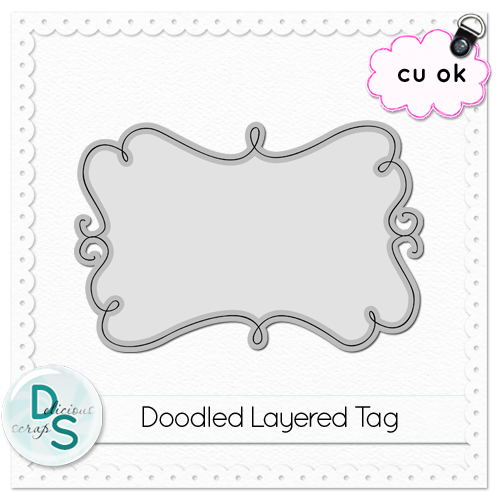
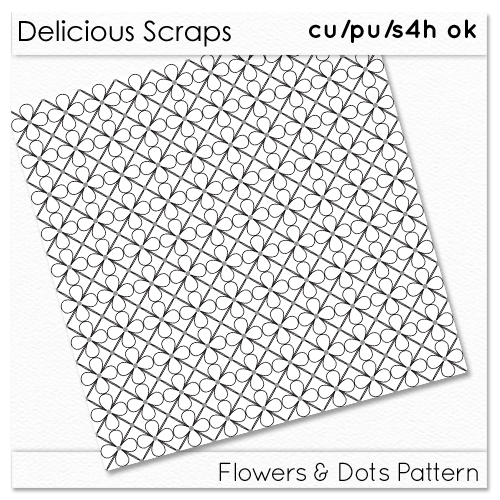
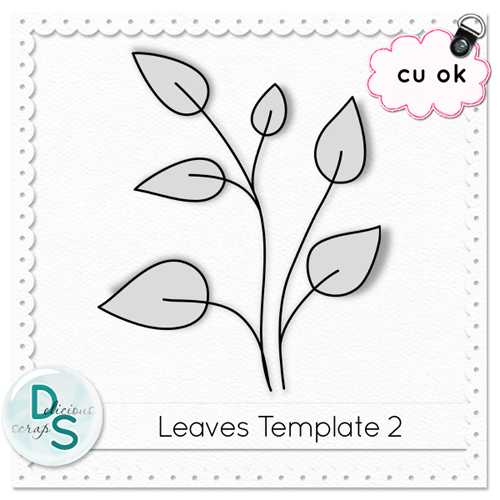
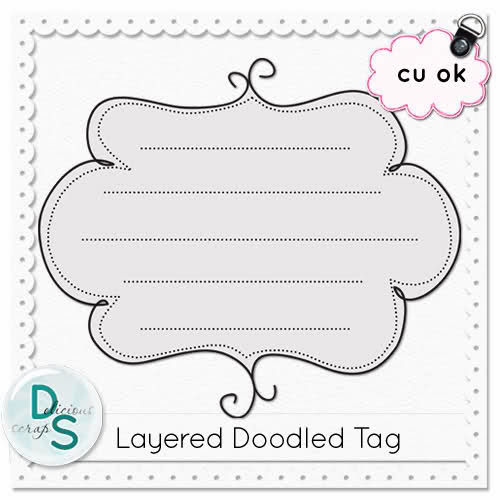
So I searched for a doodle frame or tag and came upon this fabulous website: Delicous Scraps. She's exactly what I was looking for. There's a ton of free doodle tags, plain pattern background wallpapers.

Here's a few things she has to offer, for free (click on picture to be taken to the download page):


And if there's something you like that isn't listed for free, it's just 99cents in her store!

In the end, I settled on this doodle tag of hers.


I did 4 different layers of the solid border tag from the 3 main colors of my pallette plus the black/slightly paler underline. And I added the other 2 colors from my pallette as the dotted borders, which are way less dominant, and actually hard to tell the color, but I find it finishes off well.

I wrote in the blog name with the font Simply Glamourous. I love how the capital letters are so big and fancy. I tried a few different fonts before this one, but once I tried this one I knew it was the best and I didn't need to look anymore.

I wanted to give the letters a bit more dimension so I copied the font layer and put it in the back of the first moving it slightly to make the lettering bolder and changed the color to a paler version. I often do this to text to make it pop more.

And then I had a logo:

Continue Reading...

Pages Navigation: Graphics

Continuing from where I left of in the last post about Pages Navigation organization... Now that I know what I want the labels, or pages, to be, I also had a very defined way I want them to appear and look.

I wanted them to look like file tabs, like in filling cabinets, but also be a bit whimsical and not the simple file tab shape we're used to. After some doodling on a piece of paper (I'm not very good at hand drawing things, or being creative with drawing), I managed to draw up some pretty cute looking tabs, don't you think?!


I scanned the piece of paper and opened it up in photoshop. I wanted to try to extract the shape somehow, but that didn't work out too great. I tried selecting the shape (ctrl + click on the layer and it selects the black part) and then painting the selection black, but again that didn't work very well.

So in the end I ended free hand, or free mouse drawing over the shape I had scanned. I was also able to correct when it wasn't quite as smooth as I wanted. I also tried a few thickness and settled on the medium one. It was more pixelated than I wished it was, but once it's the size you see on the blog, then it really doesn't show that much. This makes me want to try making vectors instead, then I wouldn't really have pixels. But I don't want to learn that right now, so this will have to do.

Then I wrote in my tabs, with the font Pea Ashlee Renee I made the font as big as I could while keeping it uniform for all of the labels.

Finally every label got treated to a bit of color by duplicating and coloring the tab doodle, and tilting it a bit so the black tab also shows underneath. I tried just having the colored tab but I dunno, I find with the black one in the back it gives off a better doodle vibe, which is what I really wanted.


The only thing I'm not entirely happy about is that because I freehanded the tab outline, it's a little pixelated and not as smooth as a vector art would be. I'm looking into doing the doodle with Adobe Illustrator, which should help make the outline more fluid and hopefully less pixelated.

Anywho, the real magic of these tabs is in the coding and behavior of these graphics on the webpage. Normally, they appear a little transparent, so that they don't command too much attention, but are still visible. But when you hover over them, or click on them, they become fully opaque (no transparency) and move up just a bit. It was super easy to do, too, just change the positioning and transparency on hover! Go ahead, try hovering over them or holding down your finger on them. I'm pretty proud of myself!


One part of the header down, 4 to go!
Continue Reading...

Pages Navigation

Last time, I talked about blog content organization, and I mentioned the pages bar, briefly.

To recap, I'm making a few pages, you know, those essentials that aren't quite blog content, but still essential or expected. I'm talking About and Contact, Buttons page and Parties and Features page that I decided to present as pages to free up some valuable sidebar real estate. They are nice to have, but can be quite cluttersome, so having them out of the way at the top and bottom as individual pages seemed like a smart move. I'm really hoping they will be easy to locate, especially the button page since it's less common to have them as a page, but not unseen. Well ok, I'm really still on the fence about the buttons page. It wouldn't take that much space in the sidebar section, but at the same time how many people actually use the button? TBC...

Quite a bit more unconventional is seeing a resource page and an archive/sitemap page, but I wanted to create them. The resource page because I want to give credit to the wonderful (mostly) free digital art I use around the blog; we're talking fonts, shapes, tags, doodles, paintbrushes, etc. The Sitemap I'm still a little on the fence about it, I love sitemaps for Wordpress blogs, gives an other way for people to find your content the way they want to find it (archived in chronological order, or by label/category), and includes ALL your content. Every single page.

Those are the 6 pages I'm planning. Sometimes you also see a Home tab with them, but I find that redundant seeing as the header or logo should point to the home page of a blog, or website. I really hope it doesn't confuse people, and I'll see if I need to add it later, but really the more I think of it, the more I think it's just convention for it to do that, so I don't see there being a big problem about this.

Not everyone separates their pages tabs from their content navigation tabs, but the blogs and websites that do do that have really attracted me lately. Actually, a lot of them have the pages bar at almost the very top of the blog page, sometimes above the header/logo, and then the content navigation below it. That's what I decided to do, even if I don't have that many pages, or categorical navigation to showcase.


I'd also like to have simple text links of those pages in the footer section of the blog. Websites do it like that, and I think it's expected to have links to that kind of information at the bottom of a page, too. The footer is often under utilized and neglected, but really when someone gets to the bottom of your blog you don't want that to stop them from continuing finding more stuff to read, so it's really quite logical.

Wait til you see what I have up my sleeve for graphics and coding for these bars, I'm really excited about them!!
Continue Reading...

Blog Content Organization: Navigation

Everybody's got their own way of organizing and displaying their content. Some do it well, some not so well (just a fact...). Nothing frustrates me more when I find a blog post I really enjoy than not being able to find more content to enjoy on that blog. Needless to say, I don't stay there very long.

So far, I've been trying to divide up the subject of blog content organization. It's such a huge portion of the blog, and quite multifaceted when you start thinking about it. And sometimes one doesn't realize just how much thought does, and should go into planning it well, because it's more "behind-the-scenes" stuff.

But here's what it really boils down to: can your readers find more posts to read on your blog? How easily can they find it? Is it intuitive? Is it well presented?

And here's a really big blog pet peeve of mine: I hate it when people slap on a label page for navigation in the navigation bar. Whether it be for a series or a category, it just looks awful and is so hard to navigate and find what you are looking for.

Here's what I expect from navigation, and you can very well disagree with me, but I think navigation should show you a glimpse of the content, as much of it as is relevant to know whether I want to read the post or not, without seeing the whole post and without having to click through pages and pages of archives to see more. And that's exactly what labels don't do.

A label is just a filter really, only displaying the posts with that label, and displaying all of the post. Unless you have truncated posts, which in that case can make it manageable to browse through as long as it's just a small snippet, labels are awful IMHO. And labels are already there in a widget type thing most of the time on a blog. If I wanted to view posts in this manner (which I personnaly don't) I would click on the particular label. When I click on a navigation menu, I expect to see a list of blog posts pertaining to that subject where I can CHOOSE which ones to read with ease. Also, it really helps not to have to load all the content, and pictures, you don't want to read.

That's my 2 cents on the matter, and that's how I'm choosing to display MY navigation, or well how NOT to display my navigation. Navigation takes work, and there just is no adequate shortcut for it. So at the very least, have a Project Gallery, and if you feel up to it, further separate and sort your content for easier navigation.

As I mentioned in the last post, I'm going to display my 3 main categories in the navigation bar upfront, one beside the other, then when you click on one it will open up, in a drop-down menu, the rest of the sub categories.

And here's where you need to consider touchscreens. There are no hover effects on touchscreens, so if you set your drop-down menu to open up on hover, it will not work on tablets and smartphones. I've recently come across this problem on my new tablet. It's a pain not being able to open up the drop-down menu. The only thing that makes it better is when at least it opens up a page where you can see the sub-categories and choose on. And again where labels DON'T work.

I need to look further into how to make a drop-down menu that opens when clicked; I'm sure it can be done.

I still think labels are a good idea, but they shouldn't be used instead of proper navigation. They should be their own separate navigation system. You often see them in the sidebar, which is where I'm probably gonna put them, but I'm also considering putting them in the footer section. I haven't decided yet. I'm working from the top down and I'm still in header mode.

An other thing is that I want to separate my navigation into 2: actual posts navigation bar (detailed above), and a pages navigation. I'm talking the About Page, the Contact page. Things that don't evolve over time (too much... ie static), that don't really lead to much content, but that are still quite essential and expected in a blog.

I've seen this done more and more on blogs and I find it very well presented, so I'm implementing it on my own blog.
Continue Reading...